VapoFil Official Website › Blog › Wild yam and sarsaparilla
Wild Yam and Sarsaparilla: The Two Hormone Roots, and What the Research Found
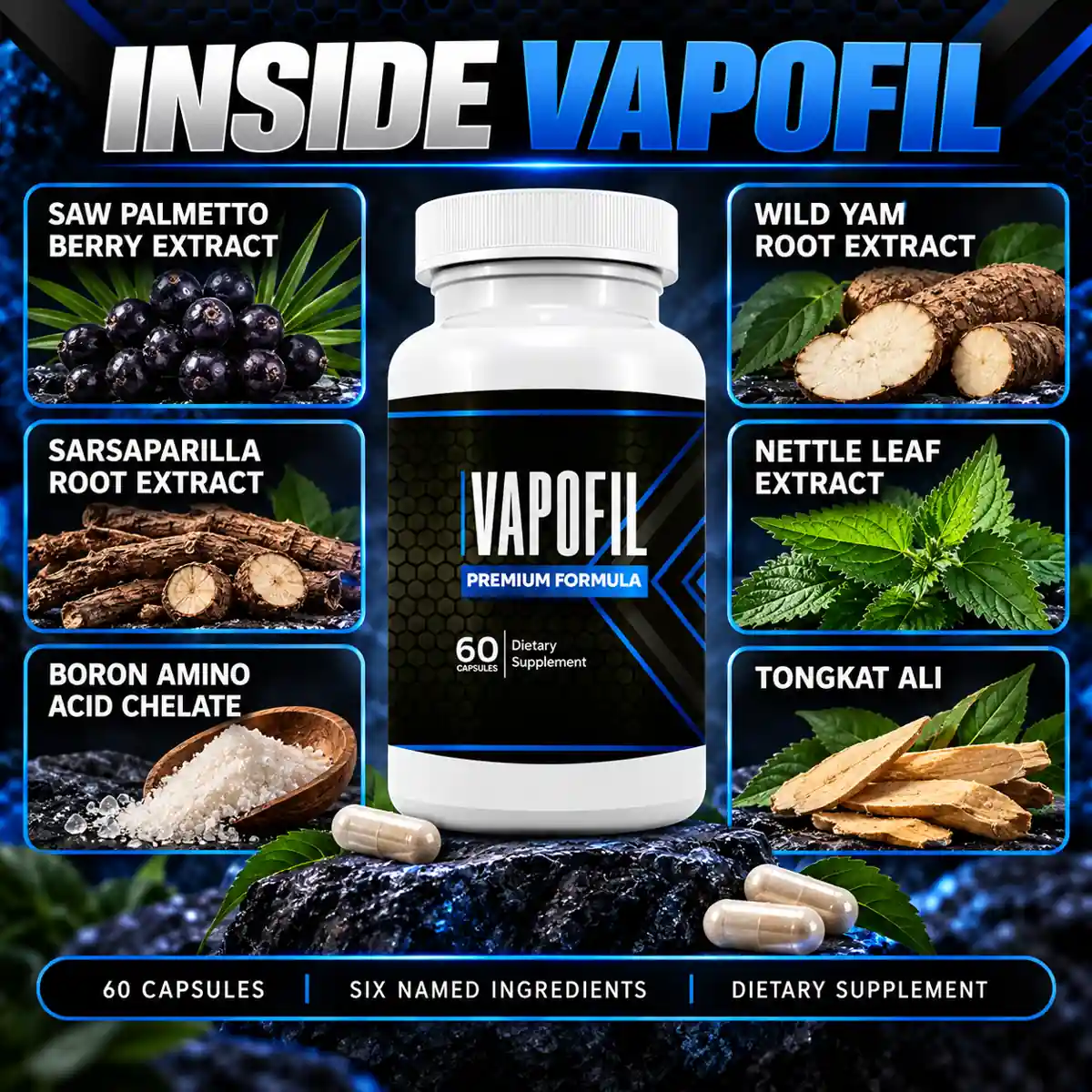
Two of the seven lines on the VapoFil panel are roots with a long reputation as hormone plants: wild yam root extract and sarsaparilla root extract, 20 mg each. The reputation is old and specific, and it rests on real chemistry. The research on what the roots do inside a person is much thinner, and most of it is in women. Here is what each root contains, what was tested, and what 20 mg of each can reasonably mean.
- Wild yam contains diosgenin, a plant steroid the drug industry has used as a starting material for making steroid hormones in the laboratory.
- The one randomised trial of wild yam, a skin cream in 23 menopausal women, found no change in hormones and no benefit over placebo.
- A positive trial exists for a different species, Dioscorea alata, in menopausal women at 12 mg twice a day.
- Sarsaparilla has no human trial in men at any dose; its research is botany, chemistry and laboratory work.
- Neither root is a testosterone source, and VapoFil makes no hormone claim.
Why these two roots are called hormone plants
Wild yam, Dioscorea villosa, is a twining vine of eastern North America with a knotted, woody root. Sarsaparilla is the common name for several climbing Smilax vines of the Americas and Asia, whose roots were sold for centuries as a tonic and later flavoured the soft drink that borrowed the name. The panel prints sarsaparilla root extract without naming a species.
The two share a chemical family. Both roots are rich in steroidal saponins, plant compounds built on the same four-ring skeleton as the body’s own steroid hormones. That resemblance is the whole source of the hormone reputation, and it is a real resemblance. The question is what it means once the root is swallowed.
Diosgenin: a laboratory starting material
Wild yam’s best-known compound is diosgenin. The Cosmetic Ingredient Review assessment of wild yam root extract describes an extract holding up to 3.5% diosgenin alongside other saponins, and notes that preparations of the plant are used by the pharmaceutical industry in the preparation of steroids. That is the history: in the mid twentieth century, chemists learned to turn yam diosgenin into steroid hormones through a series of laboratory reactions.
The same assessment tested the extract for hormone-like activity directly. In the juvenile rat uterotrophic assay, a standard screen for oestrogen-like effects, the extract at up to 500 mg per kilogram of body weight a day showed no oestrogenic activity. A starting material in a chemistry laboratory and a hormone in the body are two different things.
The only randomised trial of wild yam
Only one randomised trial has tested wild yam itself in people. The only randomised trial of wild yam was a double-blind, placebo-controlled crossover in 23 healthy women with troublesome menopausal symptoms, average age 53. Each woman used a wild yam cream for three months and a matching placebo cream for three months, in random order.
Blood and saliva were measured throughout. There was no change in estradiol, progesterone, FSH, cholesterol, triglycerides, glucose, weight or blood pressure. Symptoms eased a little on both creams, with no difference between them. The authors concluded that the cream was free of side effects but had little effect on menopausal symptoms.
| Study | Plant | Who | Form and dose | Finding |
|---|---|---|---|---|
| Komesaroff, 2001 | Wild yam, D. villosa | 23 menopausal women | Skin cream, 3 months | No hormone change; no better than placebo |
| Hsu, 2011 | Yam, D. alata | 50 menopausal women | 12 mg sachet twice daily, 12 months | Symptom score improved against placebo |
| CIR assessment, 2004 | Wild yam extract | Laboratory and animal tests | Up to 500 mg/kg a day in rats | No oestrogenic activity |
| Wang, 2024 review | Sarsaparilla, Smilax china | Laboratory and animal work | Various | No clinical trial in men |
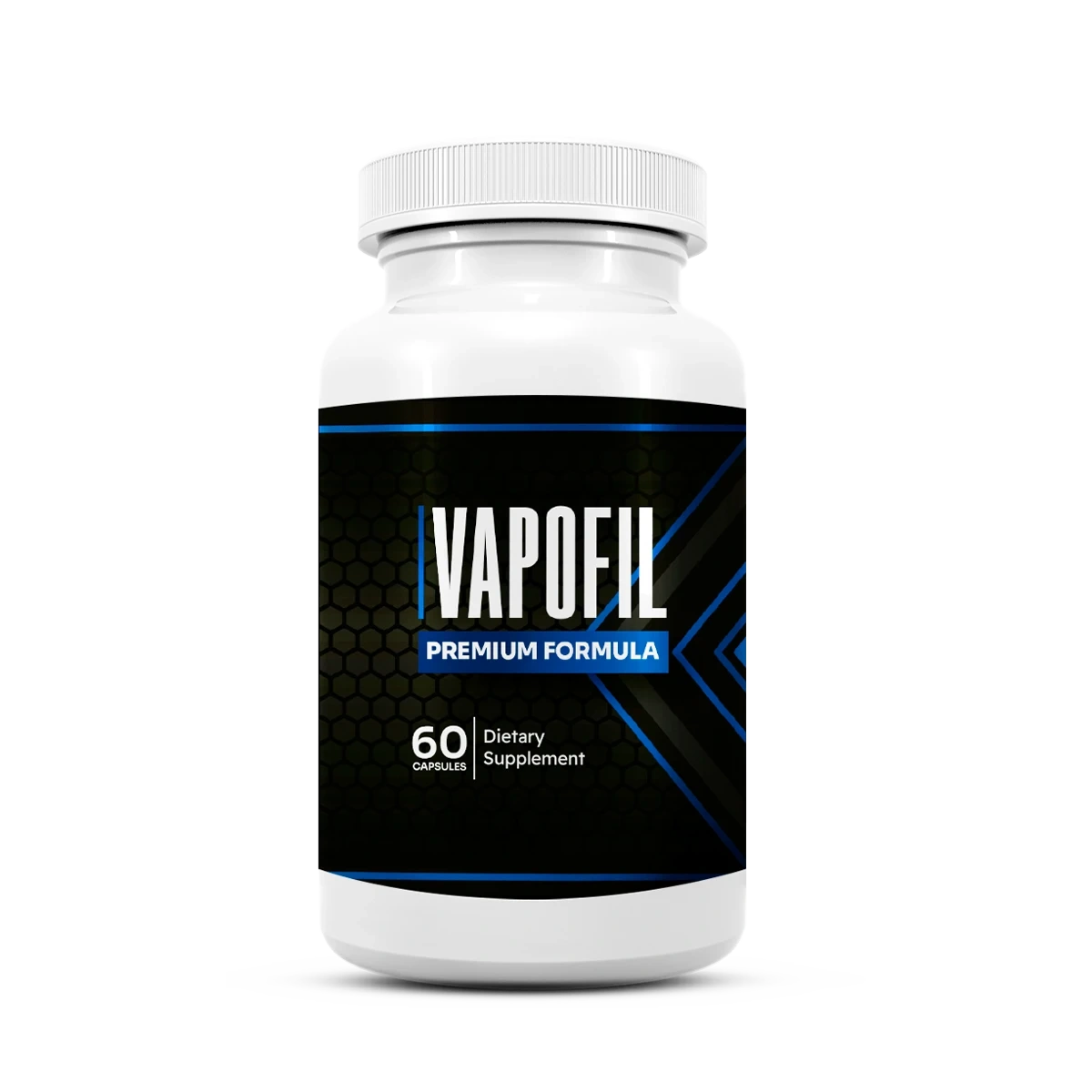
| VapoFil label | Wild yam and sarsaparilla roots | Adults 18 and over | 20 mg each in two capsules | Sold for libido, circulation, stamina, confidence |
No trial on this list enrolled men, and none tested either root for libido or testosterone.
The positive trial is a different yam
There is a positive yam trial, and it is worth knowing why it does not transfer. The trial of a different yam species in menopausal women gave 50 Taiwanese women either placebo or two sachets a day of Dioscorea alata extract, 12 mg a sachet, for twelve months. The yam group improved on the Greene Climacteric Scale, most clearly on anxiety, tension and sleep, and the extract was safe over the year.
It is a different species from the one on this label, given to women after menopause, for menopausal symptoms, for a year. Every one of those four differences matters, and together they mean the result says nothing direct about 20 mg of Dioscorea villosa in a man’s libido formula.
The lesson travels well beyond yams. When any sales page leans on research about an ingredient, four questions sort a relevant study from a borrowed one: which species or preparation was tested, in whom, at what dose, and for which outcome. A study that matches on all four is evidence for the product. A study that matches on one is background reading.
VapoFil: every root and every amount on the label
Seven printed lines, two capsules a day, and a 60-day money-back guarantee from the date of purchase.
From $49 a bottle on six · one bottle $89 · 60-day money-back guarantee
Order VapoFil On The Official WebsiteTwo capsules a day · 60 per bottle · lot VAP-26/GO-5862
Sarsaparilla: a tonic root with a thin clinical record
Sarsaparilla’s record is thinner still. The 2024 review of Smilax china, one of the best-studied species in the genus, lists 134 chemical constituents, mostly steroidal saponins and flavonoids, and a long list of activities seen in laboratory and animal work, from anti-inflammatory to antioxidant. It concludes that some traditional uses have support in those studies and others still need to be confirmed.
What is missing is people. No clinical trial of sarsaparilla in men, for libido, stamina or testosterone, exists to compare a 20 mg line against. It sits on the panel as a traditional tonic root, and that is the fairest description of it.
Reading a root-extract line on the panel
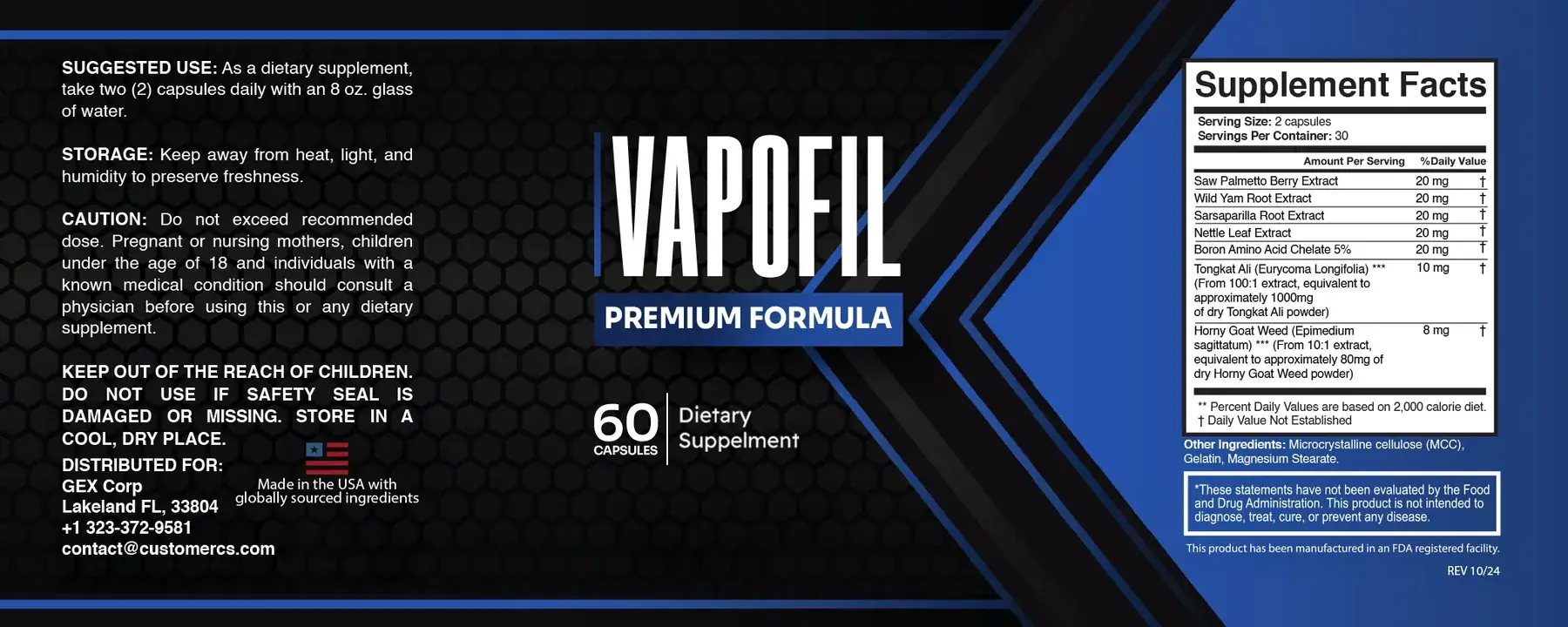
It helps to read the two root lines the way a formulator would. Each is printed as a root extract at 20 mg a serving. Unlike the tongkat ali and horny goat weed lines further down the same panel, neither gives an extract ratio, and neither is standardised to a named compound such as diosgenin. The 20 mg is the weight of the extract itself.
That still allows a useful ceiling. The CIR assessment describes a wild yam extract holding up to 3.5% diosgenin. If the extract in these capsules sat at that ceiling, 20 mg would carry at most 0.7 mg of diosgenin a serving. That is an upper bound worked from someone else’s extract, not a measurement of this one, but it shows the scale: well under a milligram of the compound behind the whole hormone reputation.
- Wild yam root extract: 20 mg of extract, no ratio, no named marker compound.
- Sarsaparilla root extract: 20 mg of extract, species unnamed, no ratio.
- Tongkat ali, for contrast: 10 mg of a 100:1 extract, stated as about 1000 mg of dry powder.
Neither root is a testosterone booster
Both roots are often sold as natural testosterone support, so it is worth setting them against the best recent summary of that market. A 2024 systematic review of testosterone boosters went through 52 studies of 27 proposed ingredients and found that most fail to raise total testosterone. Neither wild yam nor sarsaparilla is among the handful it rated possibly effective.
VapoFil makes no testosterone claim, and this website does not make one for it. Its four supports are libido, circulation, stamina and confidence, and the two roots are best read as traditional botanicals in small amounts within that formula.
What this means for a VapoFil buyer
- Do not expect a hormonal effect from 20 mg of either root; the research does not point to one.
- The label’s caution applies: pregnant or nursing mothers, under-18s and anyone with a known medical condition should check with a physician first.
- Anyone with a hormone-sensitive condition should raise plant steroids with the clinician treating it, since possible hormone-like activity is the main safety question the CIR assessment raised.
- Judge the formula by the whole panel and by the four supports it is sold for.
The ingredients page covers all seven lines, and how it works explains how the formula is meant to fit together.
VapoFil is a dietary supplement, not a treatment for erectile dysfunction or any other condition. A lasting change in erections or desire can be an early sign of something that needs a check-up: an umbrella review of the research found erectile dysfunction consistently linked with later heart disease, and MedlinePlus lists the other causes worth ruling out, medicines among them. That is a reason to see a clinician first, not a reason to start a capsule.
References
- Komesaroff PA, Black CV, Cable V, Sudhir K. Effects of wild yam extract on menopausal symptoms, lipids and sex hormones in healthy menopausal women. Climacteric. 2001;4(2):144-50. PMID 11428178. https://pubmed.ncbi.nlm.nih.gov/11428178/
- Final report of the amended safety assessment of Dioscorea Villosa (Wild Yam) root extract. Int J Toxicol. 2004;23 Suppl 2:49-54. PMID 15513824. https://pubmed.ncbi.nlm.nih.gov/15513824/
- Hsu CC, Kuo HC, Chang SY, Wu TC, Huang KE. The assessment of efficacy of Diascorea alata for menopausal symptom treatment in Taiwanese women. Climacteric. 2011;14(1):132-9. PMID 20653397. https://pubmed.ncbi.nlm.nih.gov/20653397/
- Wang M, Bai QX, Zheng XX, et al. Smilax china L.: A review of its botany, ethnopharmacology, phytochemistry, pharmacological activities, actual and potential applications. J Ethnopharmacol. 2024;318(Pt B):116992. PMID 37541403. https://pubmed.ncbi.nlm.nih.gov/37541403/
- Morgado A, Tsampoukas G, Sokolakis I, et al. Do "testosterone boosters" really increase serum total testosterone? A systematic review. Int J Impot Res. 2024;36(4):348-364. PMID 37697053. https://pubmed.ncbi.nlm.nih.gov/37697053/